Her Vang Named Assistant Director of Multicultural Programs

Tuesday, August 23, 2011


Her Vang

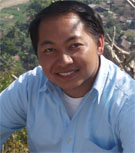
The Diversity Center at Gustavus Adolphus College will have a new face in it this fall as Her Vang has been named Assistant Director of Multicultural Programs.

Prior to joining the administration at Gustavus, Vang was a postdoctoral fellow at the Institute for Advanced Study at the University of Minnesota, where his work explored the evolution of Hmong transnational politics in Thailand and the United States after the Vietnam War. He also analyzed the intertwined relation between Hmong ethnic and transnational politics, the impact of global and regional politics on Hmong transnational politics, and the role of the Hmong diaspora in the conflict in the homeland. During 2009-10, Vang was a visiting instructor in Asian American Studies at the University of Wisconsin-Madison where he taught classes such as “Hmong Experiences in the U.S.,” “Hmong American Studies,” and “Hmong American Politics in Global Context.”

“Our campus community and alumni are excited to have Dr. Her Vang join the staff here at Gustavus Adolphus College,” Director of Diversity Development and Multicultural Programs Virgil Jones said. “His background in peace studies, theology, U.S. history and work with Hmong Archives in St. Paul will be a valued addition to the Diversity Center and Office of Multicultural Programs. His hire is another step toward our continued effort to embrace diversity as an important priority at Gustavus.”

Born the year after Communists seized control of Laos, Vang spent the first four years of his life hiding and moving from place to place to escape persecution in the jungle of Laos. He then spent the next eight years in two poverty-stricken refugee camps in Thailand. In 1988, as a political refugee, he came to the United States with his parents and four siblings.

After graduating from high school in Northern California, Vang went on to earn a B.A. in sociology from Davidson College, an M.A. in theology from the Iliff School of Theology, an M.A. in Peace Studies from the University of Notre Dame, and Ph.D. in History from the University of Minnesota-Twin Cities.

“I’m deeply passionate about student development and firmly committed to student success, particularly the academic and professional success of low-income, educationally disadvantaged, and first-generation college students like myself,” Vang said. “I hope to be a role model and a mentor to all students at Gustavus and inspire and empower them to achieve their academic and professional goals.”

Vang’s office will be located in the Diversity Center on the lower level of the C. Charles Jackson Campus Center. Jones’ office has been relocated to the lower level of the O.J. Johnson Student Union, adjacent to The Dive.

Media Contact: Media Relations Manager Matt Thomas
mthomas@gustavus.edu
507-933-7510

Source

Read more...

A real hero returns home

Monday, August 22, 2011

Hundreds honor 1st Sgt. Shua P. Yang, retiring after 23 years of Army service

1st Sgt. Shua P. Yang choked back more than just a few tears when it was his turn to take the podium at the Elks Club in Sheboygan.

After viewing a special video of his accomplishments covering a 23-year Army career, and listening to the well-wishes and words of thanks from the 200 people who came Saturday night to celebrate his service to his country, Yang thanked those who were special in his own life — his extended family, his friends, and especially his wife of 18 years, Kaokalia, and his four children: Jak, Maggie PajYing, Joshua ChueYee and Thomas MouaCheng.

"I might be a soldier, but I'm a father first," said Yang, who will retire at the end of October as the highest-ranking noncommissioned Hmong soldier in Army history. He was promoted in 2007 to first sergeant, and last December returned stateside from the last of his five overseas deployments to Iraq, where he served as head of intelligence for a 4,600-soldier division.

Yang saved the most praise for Kaokalia, who took the lead in helping to raise the family while he was away on duty.

"She is the strength of the family," Yang said.

And in turn, Yang's eldest son, Jak, presented a surprise gift to his father, a plaque he made himself while away at school in Boston. It read: "A soldier and a loving father protecting the ones he loves."

"Here you go, Dad," said Jak, 20, who flew in for the special dinner ceremony.

Yang, 44, was born in Laos, moved to the United States at the age of 9, and grew up in Sheboygan after his family settled here. He attended St. Paul Lutheran School and graduated from South High School in 1986 and was a key member of the Redwings' soccer team.

After two years in college at University of Wisconsin-Milwaukee, in 1988, Yang decided to enlist in the Army, following the military footsteps of his father, Churchill Yang, who served in the Laotian Army and was a colonel in the Secret War, during which Hmong soldiers fought alongside U.S. troops against the communist North Vietnamese army in the Vietnam War's Laotian front.

"My dad is a big example of why I went into the service," Yang said in an interview just before the dinner.

His Army career took him to all parts of the United States and all corners of the world, to Germany, Italy, Korea, Saudi Arabia, Somalia, Bosnia, and Iraq, where he served in Desert Storm in 1990 and then two tours in Iraq in 2006 and 2009-10. He went through Airborne training and intelligence training, all duly recorded in a slideshow honoring his career that was aired Saturday night.

"I had a good time and it meant a lot to me," Yang said of his career. "The Army helped me a lot, it helped me mature. I met a lot of people and the biggest thing was the travel and to see all kind of people and to learn from that."

Being away from the family for extended periods, though, has been difficult for Yang, who wants to settle in Sheboygan with his family following retirement. He currently is stationed with 1st Stryker Combat Brigade, 1st Armored Division, at Fort Bliss, Texas.

"The biggest reason I want to retire is because my family is away from me," Yang said, adding that he may look into running for local political office after he returns to Sheboygan.

Kaokalia Yang, who produced the video and photo displays of her husband's career for the audience, said she's very proud of his service to his country, and to his family.

"To us he's our hero," she said. "We're proud of him. All these (people attending) are family and friends. Out of state, in state, a lot of support. So we have this party to celebrate."

Chasong Yang, Shua's older brother and the executive director of the Hmong Mutual Assistance Association in Sheboygan, said his brother enlisted in the service "against his mother's wishes."

"After 23 years, he's made his mom and dad proud and he's made all of us proud," Chasong Yang said. "Today is not a retirement, it's more of a welcoming home."

Source

Read more...

Twin Cities community gardens: A study in variety

Wednesday, August 10, 2011

Some garden in the name of community building. Others do it for beauty’s sake. And then there are those who just like a good tomato. The Twin Cities are full of community gardeners. According to Gardening Matters, 50 new gardens broke ground in the Twin Cities since spring 2010, and some established spaces have seen waitlists so long that the lists had to be closed. On August 6, gardens opened their gates for Community Garden Day. We took a look at four participating gardens.
For more information on community gardens, see Gardening Matters website and other TC Daily Planet local food coverage.

Good Juju Garden
14th Avenue South and East 22nd Street, Minneapolis

A narrow path runs through the center of the Good Juju Garden in South Minneapolis. Throughout Saturday afternoon’s Community Garden Day barbecue, people walked through the garden – women in headscarves, a Spanish-speaking man on a bike, a young guy with his two kid nephews. Each time Christina Elías leaped up, yelling, “HEY! You wanna eat??” or “Are you on Ramadan? I won’t offer you food then!”

Two years ago, Elías just wanted to garden. Her friend Ernie Whiteman found out about the corner lot, owned by the American Indian Community Development Corporation, from a friend and got permission for Elías to plant. “I literally showed up on a bicycle with a little shovel,” she said. The community showed up on its own.

Residents of the neighboring house were so happy to see the garden in a space once occupied by dilapidated housing, that they sawed off their rain spout and put in a rain barrel. An elderly man began helping almost every morning. Two little girls call Juju their “garden school.” People often ask Whiteman why they don’t put up a fence. He says, “If they need it, they can take it.”

The space includes a three sisters garden and a medicine wheel, where sage and tobacco grow, but that’s not where the name comes from. Elías was working in the garden one day with a couple neighborhood boys. “They started scrapping. I said, ‘Hey! Only good juju in the garden!’” she said. The boys looked at her and began singing, “Only-good juju in the gar-den! Only-good juju in the gar-den!”

Alley Cat Garden
3606 ½ Van Buren Street Northeast, Minneapolis

If only all city streets were set on a perfect grid, with alphabetized street names and evenly numbered houses. But try as they might, the designers of Minneapolis’s roads could not avoid the occasional hill or odd body of water. The result is design hiccups like the land occupied by three-year old Alley Cat Gardens.

Alley Cat is a .15 acre triangular plot of county land tucked in the middle of a Northeast Minneapolis alley. “You pretty much have to know it’s here,” said Paul Bernhardt, a gardener and neighbor. So while other gardens were closing their wait lists last year, Alley Cat had trouble filling spots.

“No place to park, no water,” lists gardener Jo Bernhardt. It didn’t take long for word to get out, though. Now in its second year, Alley Cat is at capacity with 12 plots.

Getting water to an odd alley lot remains a challenge. For now, Peter Doughty and his wife Margo McCreary, who live on the alley and came up with the idea for Alley Cat, fill the gardens’ barrels with water from their hose and track how much is used. The ideal solution: a rain barrel system utilizing the alley’s rooftops. “If we were zero drain on city water, it would be a really cool thing to accomplish,” Paul Bernhardt said. For now, the Bernhardts are backyard beta-testing methods like low-pressure hoses, while the wet summer sky does the real work.

Harvest Gardens
Hazelwood Street and County Road C East, Maplewood

Xue Xiong’s mother’s corn in Laos had bright pink and yellow and green hair. “We didn’t really have dolls to play with,” she said. So they used corn. “We’d braid their hair in different styles.” Now Xiong prefers American corn. Although Hmong neighbors to her garden in the Harvest Gardens of Maplewood still grow the pink-haired Hmong corn she remembers, Xiong says, “My corn’s hair is just plain.”

Xiong is one of 495 gardeners working seven acres of land on Country Road C and Hazelwood Road. The land is owned by First Evangelical Free Church, a block away. Since the church shares facilities with Hmong Hope Community Church and was connected to the Burmese Karen refugee community through another church, 75 percent of the gardeners are Hmong, and 9 percent are Karen.

The space has expanded from one small garden in 2009 to 960 15-by-15 foot plots this year. Volunteers surveyed the land, laid the 4600 feet of irrigation, and staked the plots. Gardeners pay nothing. “We really want to just show the love of Christ through being a good neighbor and through visiting gardeners and offering what we have for people to benefit from,” said Tina Middlemiss, a First Free Church member and Harvest gardener.

Luckily, vegetables know no language barriers. Middlemiss said, “When I’m in the garden and standing up to my knees in tomatoes, and I see someone else who I don’t speak the same language as, I smile and wave and say, ‘Ooh nice.’”

Midway Green Spirit Garden
1271 West Taylor Avenue, St. Paul

A wide circle of fencing, 20 feet in diameter and six feet high, circles a small blue box. Bold black letters on a bright yellow sign read: “Warning Beehive.” But the padlocked gate will not keep these honeybees from pollinating Midway Green Spirit Garden’s 25 young fruit trees and bushes and 40 garden beds.

Steve Mitrione, the garden’s coordinator, just laughs, saying that in the three years the eight-year-old community garden has housed bees, no one besides the beekeeper has been stung – and that was her own fault. “I’ve even seen people pet them,” he claims.

Midway Green Spirit takes up half an acre of what used to be an empty city-owned lot just off Pierce Butler in St. Paul’s Midway neighborhood. Now it’s filled with sunny garden plots and a shady community space, which Mitrione said the newly immigrated Somali family across the street uses to escape from their over-sunned yard. If they can get past the waiting list, gardeners pay $10 per season.

The bees and the one-year-old orchard of apples, pears, plums, pie cherries, currants, juneberries and raspberries are the garden’s newest additions. No fruit yet, but last year, the bees produced 40 pounds of honey, which Mitrione said is being stored away, still in its combs, until they bring in an extractor. But don’t worry, he said, “It keeps forever.”

Mitrione used to have to advertise the plots, “When I started this process a decade ago there was some outright resistance to community gardens,” he said. But a lot has changed since then. “We’ve gone from being kooks to visionaries."

Source

Read more...

MINNESOTA VOICES: Kathy Mouacheupao

Friday, July 29, 2011


After Kathy Mouacheupao resigned from her position as Executive Director at the Center for Hmong Arts and Culture (CHAT), where she started working as a teaching artist in 2001, all sorts of recognition came her way. She received a Sally Award from the Ordway, she was profiled in the Star Tribune, CHAT honored her with a commitment to setting up a scholarship in her name, and she received a Bush Fellowship to allow her to use artistic programming to strengthen connections within the Hmong community.

Mouacheupao is taking things in stride. The youngest of three children (and only daughter) to Hmong refugee parents, she was born in Newton to Mato Moua Soua Mouacheupao and Sy Vang on May 19, 1978, the first and last American-born child in her family. She was named after her mother’s English teacher – in honor of her first experience with a formal education.

The Child of Refugees

Mouacheupao’s family was one of thousands of Hmong refugee families who resettled in the United States, but were the only family to land in Newton, Massachusetts. Coming from the mountains of Laos, where they had lived in a dirt-floored hut, raised chickens and farmed a small plot of land to a new country and a home with in-house plumbing, electricity, doors with handles, and refrigerators was quite a shock to her parents when they first arrived. “My parents described the extreme transition as one of the loneliest, most confusing and uncertain experiences,” she said.

When they arrived in Newton, Mouacheupao’s parents were sponsored by a church, helping them with the transition. She recalls her mother saying: “It felt like we were living in the ocean. We didn’t look like anyone else, we couldn’t communicate with anyone else, even breathing took a new learned effort. But there was school!”

Eventually, her parents decided to move to St. Paul, because there were more Hmong families living in Minnesota, as well as excellent social services. They also came to Minnesota for the school system.

In St. Paul, Mouacheupao attended Hayden Heights, and then went to Mississippi School in the third grade. During these early years, she loved school. Her parents always taught her to value education, and she did very well in her classes. Then, while in middle school, she was selected to go to J.J. Hill’s gifted and talented program, and things changed for her.

At J.J. Hill, she was one of very few people of color. “I can remember from that moment on, school was less important to me,” she said. “Having a vibrant social life was more important.” Mouacheupao wanted to make friends, and be popular.

In addition, her life became more sectioned off. She had her school life, and her church life. When she was at school, all of her friends were white. On Wednesdays, Saturdays and Sundays, her family went to church, and that was her Hmong world. “I had my best friends at school and my best friends at church,” she said. “I was a kid. I didn’t realize it, but when I think back, it’s just crazy how you form your identity and cultural identity.”

By the time she got to junior high school, she realized she was different. One of her school friends made a racist remark about an Asian couple. “I felt really uncomfortable,” she said. “I asked the kid if they realized I was Asian, and they said ‘Oh, Kathy, yeah, but you are different.'” After that, she started to question more what it meant to be Hmong.

In high school, Mouacheupao became a kind of “wild child,” she said, and ended up finishing off high school in Rhode Island, where her brother was attending Brown University. “I needed to get away,” she said.

After graduating high school in Rhode Island, she returned to Minnesota and attended Concordia University, where she studied education and sociology, with an emphasis on women’s studies. Though she got her teaching license, she decided not to teach and instead did an internship in 1998 at Asian Women United, a coalition for battered women, following in the steps of her mother, who was a women’s advocate. She was eventually hired by Asian Women United.

While working as a women’s advocate, she also began teaching at the Center for Hmong Arts and Talent. She was contracted with another teacher to do a video poetry class, and she taught the poetry part of it. She had heard about the opportunity, and though she wasn’t an active poet, she had done poetry on her own and had the teaching experience.

Lee Vang, the Executive Director of CHAT, offered Mouacheupao a job as program manager and grant writer, though she had never written a grant in her life. “I don’t know how she came to the conclusion that I could do that,” Mouacheupao said. But she was too invested with her continuing work at Asian Women United to take on a full time job. “I felt what I was doing was important, meaningful work,” she said. She declined the offer.

Discovering the Power of the Arts

In 2001, the Great American History Theater produced a play called Hush Hush, by Lee Vang and Jaime Meyer, about domestic abuse in the Hmong community. Mouacheupao was asked to give a talk-back for the play, given her experience with domestic violence issues.

“It was a life changing moment for me,” she said of the experience. “I had an audience of 300 people. I got to engage 300 people in a conversation about domestic violence.” Though her work at Asian Women United centered on talking about domestic violence, she was never able to get the type of audience and engagement that she had with her experience at the History Theatre. “It shifted my understanding of how important how the arts could be,” she said. She decided to take up Vang’s offer to work at CHAT.

Immediately, Mouacheupao started to get to know Hmong artists, and she started to connect more to the Hmong community as a whole. She began to find a sense of pride in her identity.

Around the same time, she started writing for Hmong Today, which is published by her brother, Wameng Moua. She wrote for the arts and entertainment section.

“I was really loving my job,” she said. “I was having fun with it, I was inspired by the artists, and developed an understanding of my own culture.” Thought she had been an arts enthusiast before working for CHAT, that rarely had included Hmong artists. “Working at CHAT opened my eyes to these opportunities for Hmong artists,” she said.

One day, Mouacheupao went to an open mic where several Hmong artists performed, and she realized how proud she was to be Hmong.

When Lee Vang left her position of CHAT’s Executive Director, Mouacheupao took over the position. During the following six years, she said, “I’ve been able to see how an organization has been able to strengthen the community through the arts.”

The Next Chapter

This year, Moucheupao decided to resign from CHAT, for a lot of reasons. “It started to really feel hard for me to distinguish Kathy and CHAT,” she said. “A lot of people thought I was one of the founders or that I started the organization.”

“When I was working at CHAT,” she said, “it was all CHAT. It was all work. We were doing concerts, youth programming, a monthly open mic... it was very time intensive.”

Mouchepao has decided to change course, a bit. For one thing, she and her husband, Ying Kong Lee, are talking about having a family. She didn’t get married until she was 31 (she’s now 33), which she says is old to get married in the Hmong world. She also wants to re-prioritize her life, making room for both her personal life and projects she’s interested in pursuing.

One large project she’ll be embarking on for the next four years is a fellowship through the Bush Foundation. For the fellowship she’ll be doing a lot of travelling, both within the United States and abroad, trying to connect with different Hmong artists around the world. She’s hoping to document Hmong history, with an emphasis on contemporary Hmong artists, as opposed to traditional artists. “I’m looking around the idea of biculturalism,” she said.

She’ll be documenting the history of the Hmong experience through art, she says. Most of the artists that she’s familiar with now, who are coming up with tools to express their experience, are Hmong-American — artists such as Kaolee Thao and Katie Ka Vang — but she hopes to connect with Hmong artists internationally as well. While she hasn’t entirely mapped out the scope of her project, she hopes to travel to Laos, Thailand, China, Australia, France, and California and Seattle in the United States, visiting Hmong New Year celebrations in particular. Eventually, she hopes to create a curriculum that could be used in schools such as St. Paul Public Schools, which recently adopted Hmong history into their curriculum. She also plans to create an exhibit of her findings.

She wanted to do this project because she is fearful that Hmong culture is in danger. Her nieces and nephews could barely comprehend or speak the Hmong language, and were even more removed from the community than she was. “I went through an identity crisis,” she said.

Even now, she is learning about what it means to be Hmong. For example, while she was brought up Christian, her husband was brought up in the traditional Hmong religion — animism. Though she still considers herself Christian, she’s learned about the “other side” of the Hmong community that is not.

In many ways, Mouchepao sees her fellowship as an extension of the work she was doing in CHAT. And while leaving the organization was one of the hardest decisions in her life, she’s excited to start being more thoughtful about the value that Hmong Artists have had in shaping communities.

Source

Read more...

Angelina Jolie's daughter is wearing Hmong outfit!

Cute, huh? From Time magazine here

Read more...